SYNOPSICS
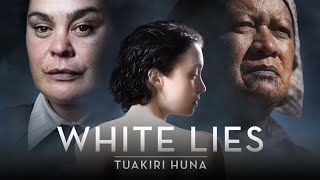
White Lies (2013) is a Maori,English movie. Dana Rotberg has directed this movie. Whirimako Black,Rachel House,Antonia Prebble,Nancy Brunning are the starring of this movie. It was released in 2013. White Lies (2013) is considered one of the best Drama movie in India and around the world.
White Lies is a story about the nature of identity: those who deny it and those who strive to protect it. Paraiti (Whirimako Black) is a medicine woman. She is the healer and midwife of her rural, tribal people - she believes in life. But new laws are in force prohibiting unlicensed healers. On a rare trip to the city, she is approached by Maraea (Rachel House), the servant of a wealthy woman, Rebecca (Antonia Prebble), who seeks her knowledge and assistance in order to hide a secret which could destroy Rebecca's position in European settler society. If the secret is uncovered a life may be lost, but hiding it may also have fatal consequences. So Paraiti, Maraea and Rebecca become players in a head on clash of beliefs, deception and ultimate salvation.
More




White Lies (2013) Reviews
Survival and identity
I loved it. The dialog was clunky but the performances were mighty and made up for it. I thought the 3 leads were fantastic. I wanted to know more about them all. I've been quite taken aback at the drastically opposing opinions. It's split my friends and family although I have to say the majority have absolutely loved but a few have disliked intensely. We've had a few arguments mostly because they felt picked on as white New Zealanders. I didn't, it was just too interesting. Such polarising views says a lot about the director. I felt she presented a very strong and unforgiving view of her interpretation of our history. Design and cinematography were outstanding. Bravo.
1920s New Zealand. Traditional medicine, family secrets
I had no hesitation in giving this film 10 out of 10. I thought it was extraordinary, as did everyone else in the cinema. Everyone sat respectfully and watched the credits roll and comments heard as we left the cinema were without exception complimentary. What a story - quite dark but very moving as we see the collision of two cultures. I believe White Lies has the potential to win Viewers' Choice Awards at film festivals. There was not a false note in it for me, although some may find Antonia Prebble's character quite rigid - but she needed to be. I am going to see this film again later this week, and it's not often that I do that.
Outstanding performances.
My daughter directed me to this site after we re-read some of the reviews for this film. I have to admit we read a review in the Herald, the Listener and even heard one on the National radio (where they called 'Rachel House' 'Rachel Church'!) and we decided not to see it. We thought our regular cinema would surely close the film down given the Luke warm reviews. Yesterday we went along to our local cinema with a view to see a festival film and we noticed 'White lies' was still on. After a lot of sighing and changing of minds we decided to see it. I am so glad we did. What a powerful and remarkable film. I wholeheartedly accept the criticism of some of the clichéd dialogue from various reviews hence my 9 out of 10. Whirimako Black gives a very assured performance for a newcomer though clearly she is a storyteller of some repute in the music world. Elizabeth Hawthorne gives a full bodied performance that we've come to expect from such an acting heavyweight. Like wise Nancy Brunning gives us a textured and full character that adds a well needed warmth to our lead protagonists journey. Antonia Prebble is indeed a porcelain doll as described by others. Yes, she is cold and unlikeable and the journey she goes on throughout this story that gives us real insight into the reasons behind this behaviour is executed remarkably well for such a young actress. In other words I believed her and followed her journey entirely. All of these performances were wonderful- but it is the servant Maraea that I couldn't stop thinking about- who I am still thinking about. What an intriguing story and an absolutely outstanding performance by Rachel House. For both my daughter and I and in turn all of our friends who we managed to convince to go along and see the film- it is this part of the story that we are most torn up about. "Like watching a dam about to burst" is how one of my friends described Houses performance. I encourage you all to go and see the film yourselves. I hope the overseas critics understand the qualities of this film better than those ones here.
Superb Film
This was a superb film highlighting the clash of cultures and the ramifications resulting therefrom. In this case, it is a clash between traditional Maori and English colonial cultures. What is the value of culture and what is the price of conformity? It is a well-developed movie. The acting was very good. The characterization was rigid and predictable based upon a viewer's initial observation of the characters and their respective roles, which actually enhanced the maintenance of the secret until late in the movie. Clues are provided that almost reach the level of red-herrings, but they are real clues with multiple interpretations that become clear as the movie progresses. All is not as it originally seems. I happened to be on an Air New Zealand flight that offered a selection of New Zealand-made films or I probably never would have had the opportunity to see this excellent film. If I had a vote, it would get my vote for best foreign film.
no white lie
What makes for a successful life? What are people prepared to do to be accepted within what they perceive to be a successful life? To claim a life they think is of a better quality than what they are born to. Being of mixed blood, what makes one more or less of which lineage? We are taken into the lives of 3 feminine roles in Colonial NZ. One (Whirimako Black) is a childless old Crone, full blood Maori, who is unlawfully practising medicinal rites like those of a Tohunga, but in Midwifery - flouting The Tohunga Suppression Act 1907 which was intended to stop people using traditional Māori healing practices which had a spiritual element. Another, (Rachel House), middle-aged Mother ("half-caste") is living the life of a slave/servant to the third, (Antonia Prebble) the Maiden wife ("1/4 cast") an upper-class English-European wife. In their roles, which one is suffering most? Which one has given up the wild feminine? Which one is the slave? Which one is free? Who is living a successful and happy life? These are the questions that are tackled within the film. Little love is expressed between the 3, but cloaked in silence, the love runs deep regardless and the sacrifices made are proof of the love, albeit misguided and ultimately destructive. The cycle has come full circle since colonial days. Not belonging to either culture is often not acknowledged because we live in a world whereby we judge instantly, unconsciously, like judging a book by the cover. Once upon a time ... opposites attract. The racial divide is still running deep on our shores from all shades of brown & white, even though there are no full blooded EnglishKiwi or MaoriKiwi left among us. An interesting topic and subject to reflect upon Colonial NZ society. Many mixed marriages were openly accepted and the life of a settler was hard no matter what colour the skin. In the case of the film though, this is not ordinary settlers we are dealing with. This is rich elite English-European society and old time Maori. The most encompassing sentence was that of Rachel House when she spoke of not belonging to either culture. I liked the whimsical nature of the film, the romantic white horse, the dog, the art deco elements within the homestead, the silk and fires. I am going to find the novella by Witi Ihimaera - Medicine Woman, from Ask The Posts Of The House. John Psathas music was lovely as usual.