
VidMate
Free YouTube video & music downloader
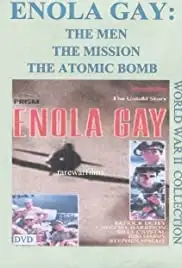
ACTOR
Billy CrystalKim DarbyPatrick DuffyGary Frank
DIRECTOR
David Lowell Rich
SYNOPSICS
Enola Gay: The Men, the Mission, the Atomic Bomb (1980) is a English movie. David Lowell Rich has directed this movie. Billy Crystal,Kim Darby,Patrick Duffy,Gary Frank are the starring of this movie. It was released in 1980. Enola Gay: The Men, the Mission, the Atomic Bomb (1980) is considered one of the best Adventure,Drama,History,War movie in India and around the world.
The decision to drop the atom bomb, the secrecy surrounding the mission, and the men who flew it.
Same Actors


Same Director

Enola Gay: The Men, the Mission, the Atomic Bomb (1980) Reviews
Well done historical drama
I suspect some of the subplots in this historical film are total fiction. But they're harmless enough and add to what could have been as dull and dry as Los Alamos itself. There is a good bit of humour injected into what is a serious and tragic story but it fits well. The integration of newsreel footage and the dissolves from black and white to colour are particularly effective. Surprisingly there is no mention of the subsequent Nagasaki bombing or the tragedy of the USS Indianapolis which played a vital role in transporting the bomb to Tinian and was torpedoed on her return journey. (Thats a movie in itself.) The film is not a history lesson. It is a darned good war movie.
Very interesting approach to the subject
Hard to believe there are only two comments on this very interesting subject. What was the attitude of the flight crews who dropped the atomic bomb on Hiroshima and Nagasaki? Where does the name Enola Gay come from? Is it true that one of the crew spent years in an insane asylum after committing this unspeakable act? Was the action justified? The book this is based on answers many of these questions. The Japanese were using back door channels to find a way of surrendering with honor, or at least to surrender and preserve their Emperor. American diplomats were un-aware of these attempts. Presidential advisers estimated the cost of invading the Japanese islands in human lives (American lives) would be in the hundreds of thousands. How the numbers were arrived at is anybody's guess. One of the crew members had a depressive personality and suffered an un-related nervous breakdown later in life. It has become urban legend that he went insane because of remorse following Hiroshima. Enola Gay was the name of Colonel Tibbets' mother. It was common practice for bomber crews in all the theaters of operation in World War II to name their aircraft after sweet hearts, wives or mothers. The actors in this mini-series do a fine job in trying to express the attitudes of WWII flyers and ground crew. It is a fine adaptation of the book and the preparation of the mission and the top secret nature of the job given to those young men is an important story that sheds light on why the bomb was dropped on human beings.
Good movie, some inaccurate reviews.
Some of the reviews of this movie are more fabrication than fact. trimmerb's allegation that "the plane's intercom" caught co-pilot Robert Lewis saying, "My God, what have we done?" is a total falsehood. Lewis wrote "My God" in his journal when he saw the brilliant flash of light that filled the plane and felt the shock wave from the bomb 31 seconds later. It was not until 1955 when Lewis, then an employee of a candy company, told a Japanese minister that he had written, "My God, what have we done?" in his journal. Lewis had only written "My God," but his attitude toward nuclear weapons had changed due to the daily fears of Americans during the Cold War that the Soviets were going to nuke a U.S. city. So he put an impromptu addendum on his written statement 10 years later. Intercoms on a B-29 were used by pushing a button to talk and releasing it to listen. There was no recording of the crew's comments, and Lewis's "My God" was conveyed in written form only. The movie was very interesting, although Lewis's asking "What is that funny name (Enola Gay) doing on my plane?" is shown in a more pleasant light than the actual incident, in which Lewis was very angry at Tibbets being named to take over the Hiroshima mission. Lewis had flown the first six missions of the previously unnamed B-29, but only Tibbets, the two flight weaponeers, radar countermeasure expert Jacob Beser and perhaps bombardier Thomas Ferebee knew what the bomb the Enola Gay was carrying was capable of. Lewis knew that the plane was carrying a powerful bomb but had no idea of the actual power that "Little Boy" had. No other regular crew member of the Enola Gay did either on that particular morning in August 1945.
Shows the necessity of "the bomb" at the time.
An interesting mix of period war documentaries, modern Hollywood embellishments and scientific reality. My father was transferred into the 509th immediately after the war, having just been repatriated from being held as a POW in a Nazi Germany. He knew all the crewmen on both B-29's that dropped the bombs on Hiroshima and Nagasaki. As a top- level communications specialist, instructor and radio operator throughout the war, he knew well of the necessity of ending the war more quickly through this unique opportunity, which saved lives in at least a 10-to-1 ratio over the conventional strategies otherwise available. This film portrayed the conflicts, the scientific uncertainties, the emotional turmoil and the military decisions that brought WWII to a successful conclusion for the Allied powers. I was pleased overall with the film's treatment and respect for the U.S. military personnel, the civilian science advisers and even the Emperor-worshiping, fanatical Japanese militarists. One of the more emotional portions in the film was the reading of a letter of a soon to die kamikaze pilot by his older brother. Though portions were technically inaccurate, this film certainly is a discussion starter and should be viewed by anyone interested in that unique aspect of WWII and its effects through the Cold War and up to modern disarmament talks and de-nuclearization treaties. Though a little dry at times, this is a valuable film in historical context and a good yarn to boot.
Brighter Than a Thousand Suns.
Serviceable TV movie about the men who dropped the first atomic bomb in warfare in 1945, destroying the Japanese city of Hiroshima and initiating the end of the war. I suspect the subtitle -- "The Men, The Mission, The Bomb" -- was added to alert younger viewers to the fact that the movie had something to do with a bomb being dropped somewhere. Recent polls suggest that students are no long familiar with even the general outlines of the period. Substantial numbers think that "Watergate" took place around 1900 and that they thought the USSR was one of our enemies. In the UK, too many students think the Holocaust is an amusement park ride and Hitler was a football coach. I swear I'm not making this up. There is of course -- there MUST be -- some domestic drama in the story. In this case, it's the same as that envisioned in another feature about pilot Paul Tibbetts, "Above and Beyond." "Paul, I have something to tell you. The children and I will be staying at my mothers." "So you're leaving me?" "It just got too confusing." The wife is disturbed by -- well, let the experienced viewer pick the right answer. (A) Her husband's increasing distance and irritability due to his burdensome responsibilities; (b) Wendover AFB's plumbing is not up to snuff; (c) Paul Tibbet's plumbing is not up to snuff. CORRECT! The film is a bit stretched out because of the domestic episodes, though they involve an appealing and quietly suffering Kim Darby, and because of semi-comedic efforts of Billy Crystal as an Air Force Lieutenant trying to ditch the bulky MP who has been assigned to accompany him as a bodyguard and watchman. In the course of their training at Wendover in the middle of Utah's Great Basin desert and later on Tinian Island in the Marianas, comic incidents take place, friendships are tested, and Lt. Col. Tibbets grows ever more contentious. Some of the lesser characters deliver weak performances. Their unpracticed voices stand out like gastropods on their poduncles. But not the principals, like Patrick Duffy, Stephen Macht, or James Shigeta. There is a striking scene in which Duffy, as Tibbets, is disgusted with the recklessness of an old friend, Gregory Harrison, and snaps out to his commanding officer, Macht, that he wishes somebody could just get rid of Harrison. Macht turns slowly and looks up at him with surprise and an expression of dead earnest. "Really? (pause) Okay." Duffy, grasping the covert message, hastens to add, "No, no -- not that way." The screenplay is adequate, not insulting. James Shigeta represents the view of the Japanese officer committed to the support of the emperor while others plot to depose Hirohito and continue fighting. His younger brother, a teen, is swept up in the Kamikaze and dies in an act of altruistic suicide. Impressive job by Shigeta. He writes his brother a poem, which is taken along on the last flight. Our conception of masculinity is stiflingly constricted. The Japanese pilots left poems and hand-carved dolls for their loved ones. The generals of Ancient Greece discussed the philosophy of aesthetics the night before battle. If our soldiers did anything like that, they'd have one foot in fairydom. The continuity is flawed. Billy Crystal, playing the usual Jewish wise guy from Brooklyn, has been kept in total darkness about the mission, but enters a room in which a miniaturized and devitaminized Robert Oppenheimer played by Robert Walden, gives a thirty-second chalkboard explanation of a weapon only a graduate in physics could understand, and Crystal emerges from the room fully enlightened as to the nature of the bomb and his own inclusion in the mission to drop it. It would take longer than that to learn elementary basket weaving. Nice shots of airplanes in flight. I wonder how many have been inside a B-29. It was a mammoth of the period by any standard and the most technologically advanced but it was a bitch to fly. Pilots nicknamed it "the beast." But, as gigantic as it looks, I managed to climb inside one at the museum at Wright-Patterson in Dayton, Ohio, and it was surprisingly crowded. You crawl around and bang your head. Hard to tell how closely the film sticks to historical fact. I don't know, for instance, that Crystal and his new friend and former MP shadow have a shoot out in a Tinian cave and the MP is killed, prompting Crystal to brood, however briefly, over the meaning of life. And I was under the impression that the bomb had to be armed in flight by a naval officer, the US Navy not wanting to have this epic event depicted as an all-Army show. In any case, the Enola Gay with Tibbet in the left seat dropped the bomb on Hiroshima. Three days later, Bock's Car dropped another on Nagasaki, and in a few days Japan surrendered and World War II was at an end.